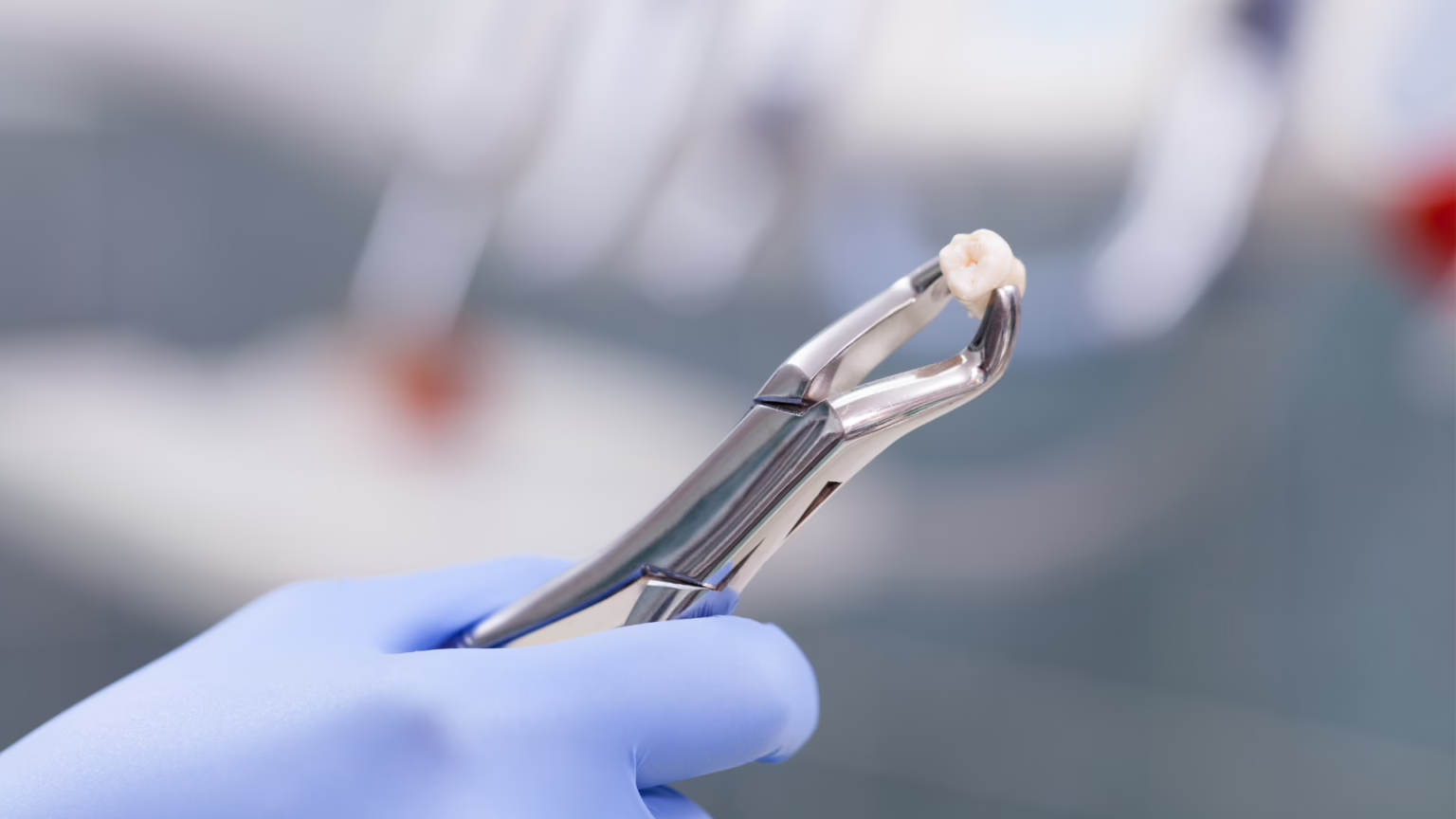
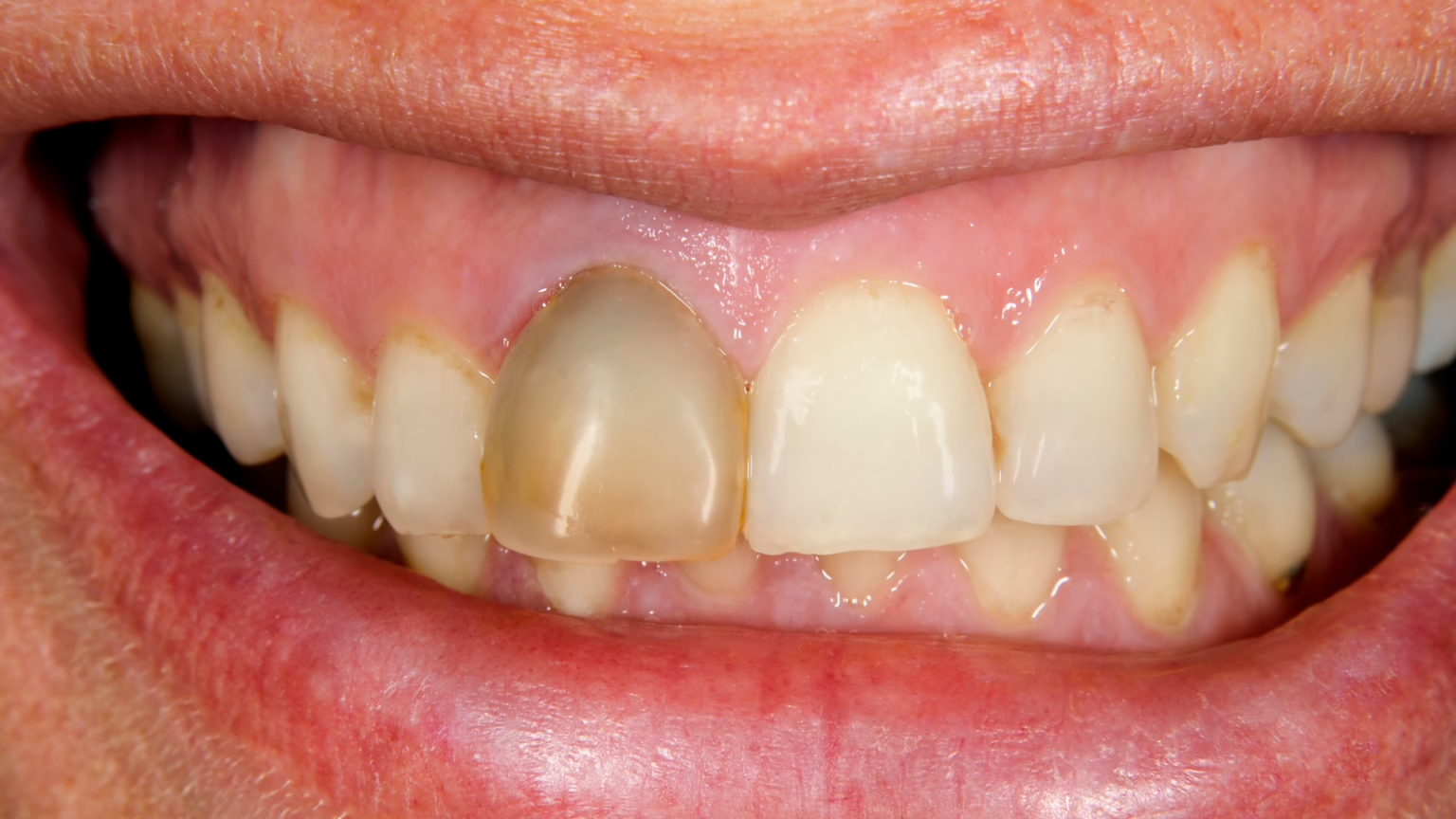
If you’re missing a tooth — or living with one that’s failing — you’ve probably wondered whether a dental implant is an option for you. The short answer: most healthy adults with a missing tooth are candidates for dental implants. Good candidacy comes down to a few things your dentist can check, including your overall health, the health of your gums, and whether there’s enough bone to support the implant. At Brennan Dental in Chandler, AZ, Dr. Elliott Brennan helps patients understand where they stand before anyone commits to treatment.
Here’s what actually goes into that decision, and what to do if you’re not quite ready yet.
What Is a Dental Implant, Briefly?
A dental implant is a small titanium post that acts as a replacement tooth root. It’s placed in the jawbone, where it fuses with the bone over a few months to form a stable foundation. A custom crown is then attached on top, giving you a tooth that looks and functions much like a natural one. Implants can replace a single tooth or, with approaches like All-on-4, support a full arch. (For a full walkthrough of the procedure itself, see our dental implants page.)
Who Makes a Good Candidate?
Most people who are healthy enough for a routine tooth extraction are healthy enough for an implant, according to the American Academy of Implant Dentistry. A few factors matter most:
Healthy gums
Because an implant sits in and around your gum tissue, gum health is important. Active gum (periodontal) disease can interfere with healing, so it’s usually treated first. The good news is that treating gum disease and then placing an implant is a common, well-understood sequence.
Enough jawbone to anchor the implant
An implant needs enough bone to hold onto. When a tooth has been missing for a while, the bone in that area can shrink over time — a normal process the American Dental Association describes after tooth loss. If there isn’t quite enough bone, that doesn’t mean implants are off the table; it often just means a bone graft is added to the plan first.
Generally good overall health
Well-managed general health supports healing. Conditions like diabetes don’t automatically rule out implants, but they’re worth discussing because stable health tends to lead to smoother recovery. Smoking can affect how well an implant heals, so your dentist will factor that in too.
A commitment to home care
Implants are brushed and flossed like natural teeth. Patients who keep up a steady home routine and regular checkups tend to get the most out of them.
Common Concerns That Don’t Automatically Disqualify You
Many people count themselves out before they’ve even asked. A few of the questions we hear most often around Chandler and the East Valley:
“I’ve been missing a tooth for years — is it too late?”
Usually not. Even when some bone has been lost, grafting can often rebuild enough support for an implant. The only way to know is an evaluation.
“Am I too old for implants?”
There’s no upper age limit for dental implants. Candidacy is about your health and bone, not the number on your driver’s license — which is why plenty of retirees across the southeast Valley, including communities like Sun Lakes, choose them.
“I was told I don’t have enough bone.”
That’s a candidacy factor, not always a dead end. Bone grafting is a routine part of many implant plans and is designed to create the foundation an implant needs.
How We Determine Candidacy at Brennan Dental
Figuring out whether implants are right for you starts with a consultation, not a commitment. During an evaluation in our Chandler office, Dr. Brennan reviews your medical history, examines your gums and remaining teeth, and uses digital imaging to assess the bone in the area. From there, you get a clear, personalized explanation of your options — implants, a bridge, dentures, or preparatory steps like a graft if needed.
Our patients often tell us that what they value most is that we explain everything and never push treatment. You’ll leave the consultation understanding your choices, including the trade-offs of each, so you can decide at your own pace.
Implants vs. Other Options
Implants aren’t the only way to replace a missing tooth, and they aren’t automatically the right choice for everyone. A traditional bridge relies on the neighboring teeth for support and can be a strong choice in some situations. Dentures remain a practical option, especially for replacing several teeth at once. What sets implants apart is that they replace the tooth root itself, which helps preserve jawbone and keeps neighboring teeth from being altered. The best fit depends on your mouth, your health, and your goals — a conversation worth having in person.
What About Cost and Insurance?
Every situation is different, and the investment depends on your specific plan — whether you need one implant or several, and whether preparatory steps like a graft are involved. Dental insurance coverage for implants varies widely. Rather than guess, our team will walk through the details, your coverage, and available payment options during your consultation so there are no surprises.
The Bottom Line
If you’re missing a tooth in Chandler or the surrounding East Valley, there’s a good chance you’re a candidate for a dental implant — and a straightforward way to find out for sure. An evaluation gives you real answers about your gums, your bone, and the options that fit your life, with no pressure to move faster than you’re ready to.
Curious whether implants are right for you? Schedule a consultation with Brennan Dental or call 480-498-8825. We’ll help you understand your options and take the next step whenever you’re ready.
This article is for general educational purposes and isn’t a substitute for an in-person evaluation. Dr. Brennan and the Brennan Dental team can assess your individual needs during a consultation.
Sources referenced: American Dental Association (MouthHealthy.org), American Academy of Implant Dentistry (aaid.com), American Association of Oral and Maxillofacial Surgeons (aaoms.org).